

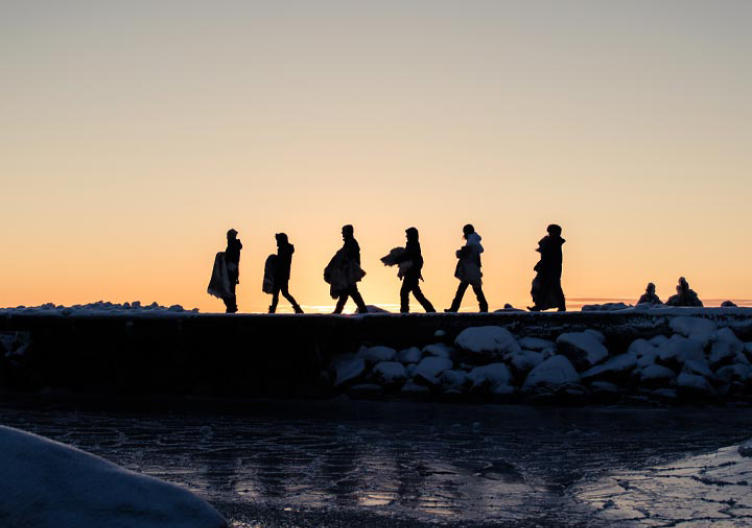
Above the entrance to the old station building on the platform in Björkliden, a sign marks the distance to Stockholm: 1,515 kilometres. Just beside it, the elevation is noted – 420 metres above sea level. Together, these numbers say more than just where we are. They tell the story of how far everyday life feels from this place, and how close the mountains truly are. Only a few hundred metres away – just a handful of strong pole pushes from the platform – the ski area begins. Here, skiing feels instantly accessible.
For me, Björkliden is not a new place. More than twenty years ago, I stepped off this very train for the first time. I stayed far longer than planned, lived and worked here for several seasons, and came to know the village and the surrounding mountains far beyond marked trails and groomed pistes.


Fantastic views
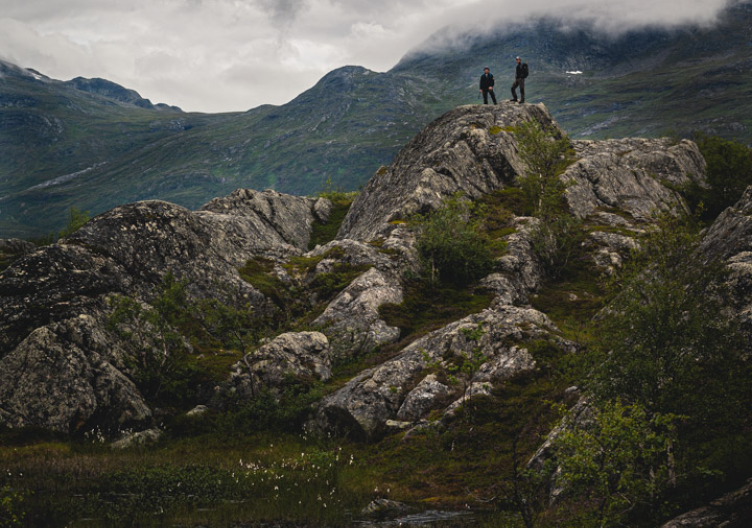
While much has changed in Björkliden over the years, the mountains remain timeless. The views are still vast, and the skiing still begins almost directly outside the hotel entrance. I arrive with my group – photographer Fredriksson and our friends David Kantermo, Nova Crawford-Currie, Josefine “Jojo” Ås and Håkan Stenlund – and leave our luggage in the lobby of the classic Hotel Fjället.
We changed into our ski gear before leaving Abisko earlier that morning and are ready to head straight out. Just outside the hotel entrance, we clip into our skis and glide straight into the hotel slope, which quite literally starts around the corner.
Also read
Your guide to the northern lightsRiksgränsen Banked Slalom
It’s all about carving. No jumps, no flips, no rails. Just the beautiful art of turning on a snowboard.


In 2026, Björkliden will celebrate its 100th anniversary. The fact that both the village and the ski resort are located here is no coincidence. Björkliden emerged alongside the construction of the Malmbanan railway line between Kiruna and Narvik – one of the most ambitious infrastructure projects ever undertaken in Scandinavia. Temporary communities sprang up along the route for railway workers, engineers and labourers, and Björkliden became one of these key hubs.
The first drag lift
By the late 1930s, mountain tourism in Björkliden had begun to take more organised form. With the completion of Hotel Fjället, the area gained comfortable accommodation with spectacular views, opening the mountains to more visitors than just those working along the railway. The next major milestone came in 1947, when the resort – and the entire county of Norrbotten – saw its very first drag lift. With it, lift-served skiing truly took shape, laying the foundation for the ski area still in use today.
"It soon becomes clear that conditions are excellent – the pistes are firm, smooth and generously wide, inviting confident, fast skiing"


As we head out into the ski system, it feels natural for me to take on the role of guide for the day. After several seasons in Björkliden, the terrain feels second nature, and we work our way through the entire area. It soon becomes clear that conditions are excellent – the pistes are firm, smooth and generously wide, inviting confident, fast skiing.
Child-friendly
For many visitors, the slopes closest to Hotel Fjället are the obvious choice, especially for families with children. Björkliden’s reputation as a family-friendly resort is well deserved – but it doesn’t tell the whole story. With one of the largest vertical drops in Sweden, there is also plenty of room here for skiing that is both steep and fast.
Rallarsvängen, the resort’s longest run, is often mentioned as one of Sweden’s best groomed slopes. Personally, I have always been more drawn to Himlabacken – slightly wider, more undulating, and with a character that encourages an assertive style of skiing. This is where steel edges really come into their own.


When I first started working in Björkliden in 2003, the resort was still owned by the Swedish Railway Workers’ Holiday Home Association, which had already purchased the village’s former engineer’s residence, Gammelgården, back in 1926. The aim was to offer railway employees a place to unwind in the mountains.
In 2005, Björkliden gained new owners and entered a new phase of development.
Joint lift passes
Another major change followed in the early 2010s, when the same owners also took over the somewhat legendary resort of Riksgränsen, 30 kilometres further west. Two strong ski destinations with a shared history but distinctly different characters were brought closer together. For guests, this meant joint lift passes, complimentary transfers between the resorts, and new opportunities to combine skiing in two very different environments during the same stay.
Today, Riksgränsen is far better known for its playful terrain and extensive off-piste skiing than Björkliden. That reputation is well earned – but it does not mean that Björkliden lacks opportunities beyond the groomed runs.
Also read
The love for skiing


"Läget, med fjället och skidåkningen direkt utanför entrén, gör hotellet till en naturlig samlingspunkt i Björkliden"
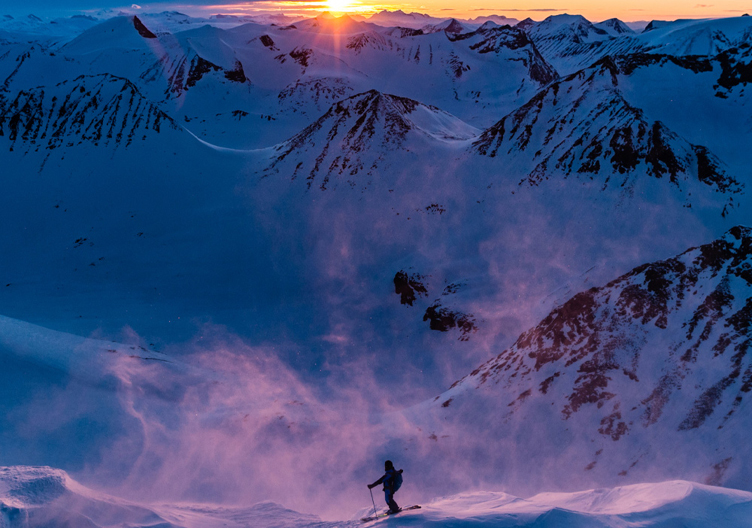
At the very top of the ski area, right next to the Kitteldalen lift, lies the off-piste area Svarta Björn. Access here is remarkably easy. The skiing begins quite literally a snowball’s throw from the lift. As many guests tend to stick to the pistes, it is often possible to find untouched snow here long after a major snowfall.
The off-piste runs are not long, but they have a clear rhythm. We spend the next few hours lapping the Kitteldalen lift, enjoying several playful descents before eventually feeling satisfied with the day and skiing back towards the hotel.
Mattias Fredriksson
This is the story of how lifestyle photographer Mattias Fredriksson’s career took off in Riksgränsen back in 1990s.

During our stay, we are based at the historic Hotel Fjället, which for decades has offered accommodation with sweeping views over Lake Torneträsk and the Čuonjávággi valley. With the mountains and skiing right outside the entrance, the hotel naturally serves as a social hub in Björkliden.
Beyond the hotel, several accommodation options reflect different ways of experiencing the mountains. At Kåppas Stugby, guests stay in self-catered cabins nestled among mountain birch trees, with convenient ski-in/ski-out access. Higher up the slope lies Solhyllan, an exclusive collection of cabins offering generous space and a blend of modern design and traditional mountain architecture.
A view that never loses its charm
Down in the village, next to the railway line, stands the classic Gammelgården. Today, it primarily accommodates larger groups and parties, offering a stay where Björkliden’s early history is still clearly present – both in the building itself and in the way guests live here.
A couple of hours after returning to the hotel, checking in, showering and enjoying a sauna, we gather once more in Restaurant Lapporten. We settle at a table by the window, and even though darkness has now fallen outside, it is impossible not to let our gaze drift through the restaurant’s panoramic windows. The menu features classic ingredients from northern Sweden – reindeer, Arctic char, moose and Kalix vendace roe – presented in modern interpretations.

Timeless regional specialties
We are by no means alone in the restaurant this evening, but it is clear that many guests have also chosen to dine in the hotel lounge and lobby bar. The atmosphere there is slightly more relaxed, with a menu leaning towards uncomplicated comfort food. Moose meatballs, schnitzel, fish and chips and various burgers – classic mountain dishes that always feel right after a day on the slopes.
Also read
World-class cuisineThe Master’s Playground
Freeride world champion, Kristofer Turdell’s amazing ride down Duolbagorni in the Kebnekaise massif.
A blend of visitors
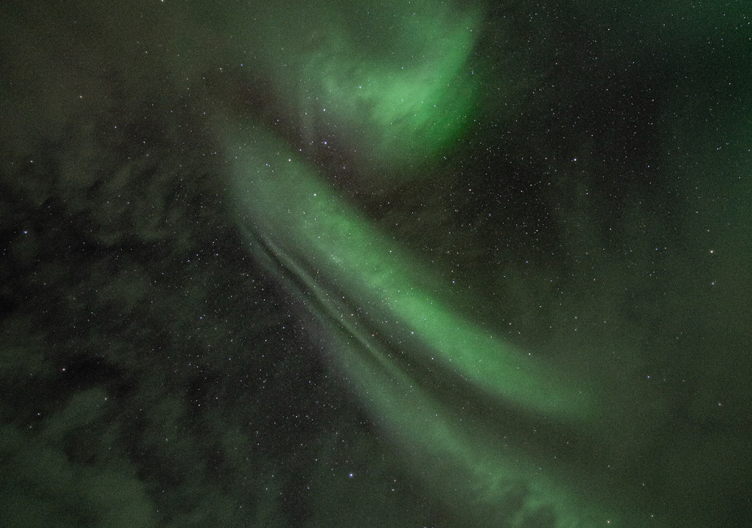
After dinner, we bring our drinks into the lobby and settle into a sofa by the fire burning in the centre of the room. Around us is a typical mix of guests – a few families with children, a group of friends, and some international visitors. From time to time, a few of the foreign guests step outside to the hotel car park, hoping for a glimpse of the northern lights. We are approaching the end of the aurora season, and daylight is slowly returning.
As the evening winds down, conversations begin to quiet and the comfort of our hotel rooms becomes ever more inviting. Tomorrow, the journey continues. We will leave Björkliden behind and travel nine kilometres further up into the mountains, to Låktatjåkko – Sweden’s highest mountain station.


 Part of theme: