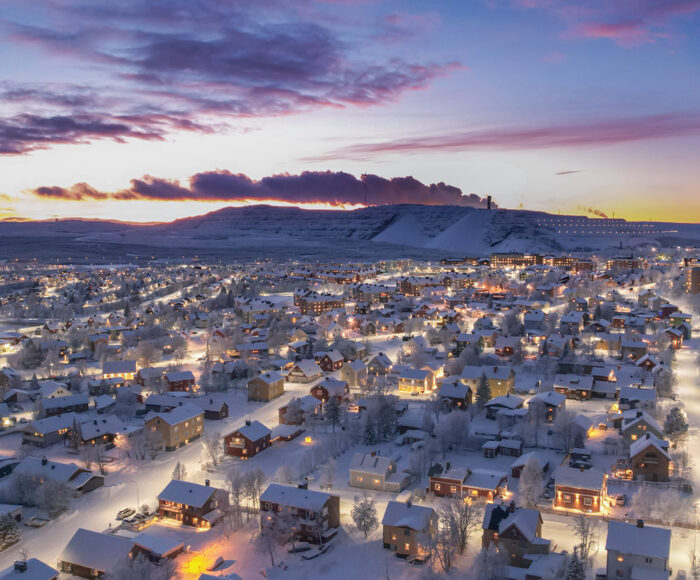
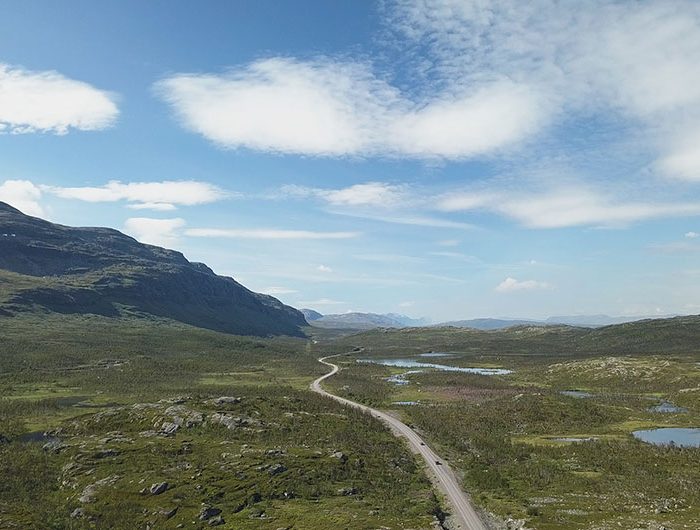
The morning train arrives in Kiruna on a summer day in July. The city is known for its mine, nature and culture. All year round, under the aurora borealis or the midnight sun, Kiruna is interesting for the world’s travelers. But because of the mine, the whole town is now moving. So how do you write a guide to a city that won’t exist in a few months? Other than that there is a rush. You have 48 hours to do something exciting in a city that will soon be another.
Morning: When the train arrives in Kiruna the last part of the journey has been dominated by the view towards the Kirunavaara mine. The one who, in a sense, sets the rules for the city. You decide to take the bus into town and walk away to Camp Ripan, the hotel you booked this evening. If you have an old image, or memories of Kiruna, you can quickly revise the image. The city’s old skyline, with famous architect Ralph Erskine’s classic block “Ortdrivaren” and the city’s old entertainment center Scandic Hotel Ferrum is now being dismantled. In a way sad. But when Erskine himself was asked what he thought should be done with the Ortdrivaren block – when it was clear that the city had to move – he is said to have replied: “Blow it up”.
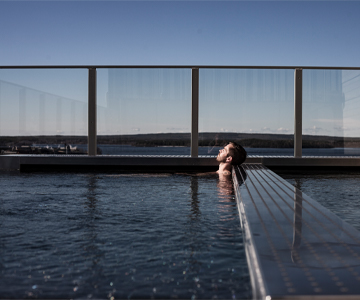
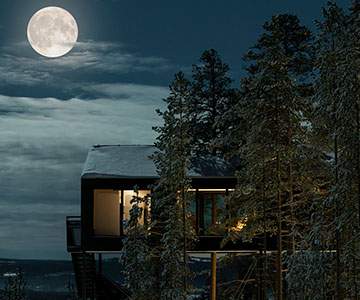
Camp Ripan's kitchen is one of Europe's most eco-friendly and its Aurora SPA has won a prize in the World Luxury SPA awards.
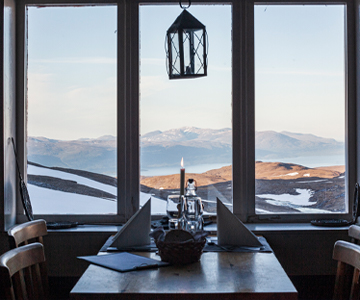
Lunch: Check-in at Ripan is a breeze and you can book dinner as well as SPA at the facility. Both award-winning experiences. The kitchen is one of Europe’s most eco-friendly and Aurora SPA has won a prize in the World Luxury SPA awards. The SPA ritual, like the hotel itself, takes its strength from the cultures that meet in Kiruna; of the settlers, the Sami and the Tornedalings. After you leave your things at the hotel, put on your hiking boots. Lunch will be at nearby STF Malmfältens Folkhögskola – judging by the number of mining trucks outside the school, the lunch is worth the money. That’s right.
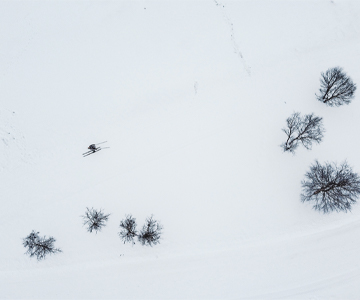
Afternoon: The area around Camp Ripan and the school are parts of the “old” Kiruna that remain. It is land that will not be affected by the mine’s growth in the near term. After lunch you walk along the tracks in the forest, which in winter are fantastic cross-country tracks but now suit runners and hikers better. You hike to the top of the Luossavaara mountain.
About Kiruna
Kiruna is a small mining town located smack centre of the Aurora oval. Home to Abisko National Park, Sweden’s highest mountain Kebnekaise and the ski resorts Björkliden and Riksgränsen, and the original Icehotel in the small village of Jukkasjärvi, by the Torne River. The name means “meeting place” in Sámi. Kiruna is also a town on the move (yes, they’re moving an entire town) towards a sustainable future for its inhabitants.
Have a chat with the local tourist information for more insights: kirunalapland.se
Afternoon tea: At the foot of Luossavaara mountain, some new buildings have been erected, but several of Kiruna’s classic wooden houses have also been moved here. Not least the Hjalmar Lundbohm building, Kiruna’s first real house, where the superintendent himself often welcomed Sweden’s financial as well as cultural elite. It is impossible to ignore the fact that the city played an enormous role in modern Swedish industrial history. But Hjalmar Lundbohm also worked for the culture to gain a foothold in the Arctic. Today, the building is a café run by Spill. Among good pastries, I learn something about the farm and about the city, as well as discovering some beautiful art. Among other things, a wood chest painted by Nils Nilsson Skum.
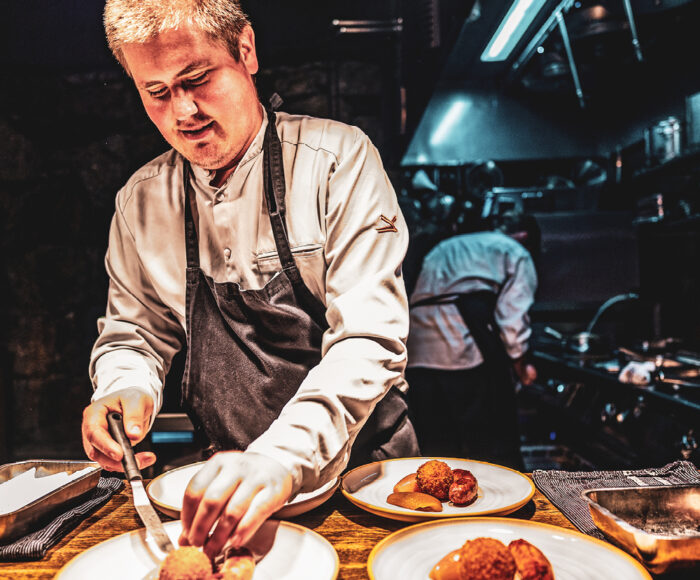
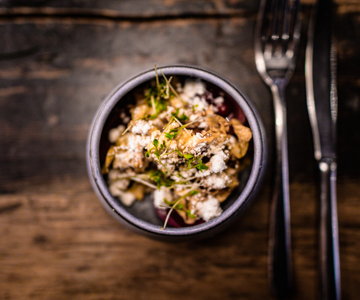
Evening: You walk through the Norrmalm district, where the classic Mattojärvi ice farm is located. This is Sweden’s oldest existing ice rink and has shaped a number of hockey players. Not least Börje Salming, one of the all time greats who called “Matto” his second home. At Camp Ripan, you enjoy your SPA ritual and an extra moment in the sauna, before taking a seat at the table in the restaurant. Here you can experience flavors from the cultures that have characterized this city since the mine came into being. Kalix löjrom and lamb, Västerbotten cheese and gahkku, reindeer and char, all in a perfect order.
The tour down into LKAB's visitor mine is a three-hour excursion into the underground. Photo: LKAB
Here, 530 meters below, you will learn about the mining of the past as well as the future. Photo: LKAB
Morning: The tour down into LKAB Visitor Centre is a three-hour excursion into the underground. But here, 530 meters below, you will learn about the mining of the past as well as the future. You decide at the last moment to come along, and are lucky that there is an available seat. The tour is in every way an investment to understand why Kiruna has to move. How the mine helped shape this place.
Lunch: You have decided to change accommodation for the evening. Normally you don’t do that, but since the city is a bit divided, you feel that you want to experience the new part of the city as well. Scandic Kiruna is the alternative. For lunch you visit another classic in the city. Empes has existed in Kiruna since 1945. A classic Swedish “grillkiosk”, which the rock journalist Markus Larsson once called: “A church of class and fat where everyone is welcome”. There are of course many other lunch options. For example, in the new Kulturhuset Aurora in the new center.
Early afternoon: After Empes, which is also to be moved, you go to Kiruna’s church. The red building has been named Sweden’s most beautiful building several times. The church, with neo-Gothic features and a nationalist spirit, is partly reminiscent of a Sami hut. Some of Sweden’s most recognized artists have left their mark on the work. Gustav Wickman was the architect, Prins Eugen created the altarpiece, Christian Eriksson made the twelve gilded statues on the side of the church, but Albert Engström and Ossian Elgström also have works here. Art has always been important to Kiruna. For a long time there was a plan for a 33 meter high Picasso sculpture at the Högalid school. Something that unfortunately did not happen. According to plans, the entire church is to be moved in 2025.
Kiruna's new town hall, Kristallen.
Scandic Kiruna.
Late afternoon: After a visit in the new center; where, among other things, Kiruna’s bookstore has books about Kiruna’s history and the outdoor shops – Vildmarkshörnan and Höjdmeter – stand out well; you check in at Scandic. The architect Thomas Sandell, from SandellSandberg, has designed the hotel with inspiration from the Giebmegaisi mountain. You cross the square to Kiruna’s new town hall, Kristallen, designed by the Danish architectural firm Henning Larsen. The town hall is a round snow-white building that opens up into a kind of golden living room for people to meet. You take the elevator to the top floor and walk down, floor by floor. Here is Konstmuseet with various exhibitions. But the walls of each floor of the house hang parts of Kiruna Municipality’s art collection. You meet famous artists such as Britta Marakatt-Labba, Lars Levin, Nils Nilsson Skum, Christian Eriksson and others. But also artists with typical Kiruna connections, such as Aili Kangas and Alvar Jansson.
Dinner: At Momma’s Steakhouse you go for the Shiitake soup as a starter and suovas for the main course. The restaurant name Momma’s has been brought with it from the Ferrum hotel to the new Scandic. The restaurant is an institution in Kiruna’s history, dating back to 1969. The name Momma belongs to the mine, after two Dutch brothers who tried to make mining profitable in the north as early as the 17th century. But if you don’t want to eat at the same hotel you’re staying at, there are cafes, pizzerias, kebab and sushi restaurants in the new center. When Elite Hotels completes its new hotel in 2024, there will be more restaurants and a new nightclub in town. But this evening you’ll settle for the view from the roof bar at Scandic.
Malmbanan. Photo: LKAB
Packing up: You eat breakfast before heading to the train. The journey is once again about to begin. You could choose to go towards the mountains, to Abisko, Björkliden, Riksgränsen or Narvik on the Atlantic coast. You could also go to Nikkaluokta and the Kebnekaise massif. You realize that you didn’t make it to Icehotel in Jukkasjärvi this time either. But when your train departs along Malmbanan, one of Sweden’s most significant industrial projects, you have time to think about what will have changed by the next time you see each other.
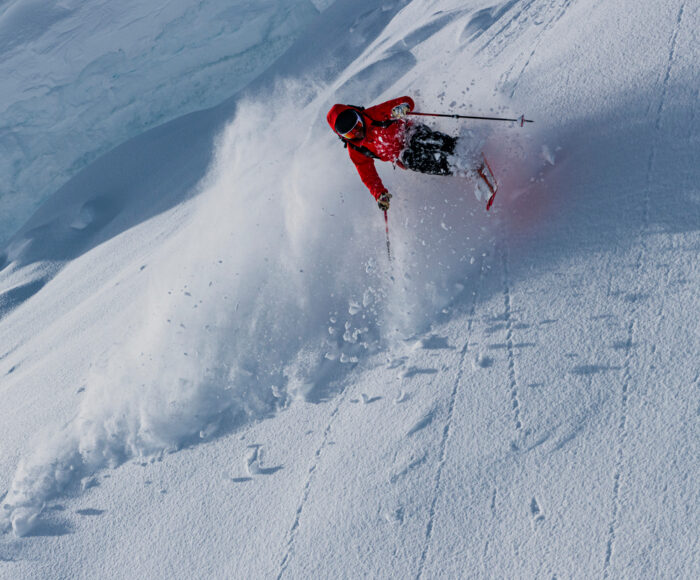
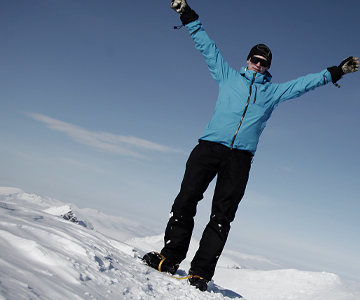
It takes two things to become a good skier or snowboarder: a mountain to climb and a will of steel. How good you become in the end does not depend on the size of the mountain, just on how much you want it.
People here in the North are accustomed to change; we even move entire towns now and then. At the moment, this region is in the middle of the biggest industrial transition in living history. One could wonder what that does to the people and the place.
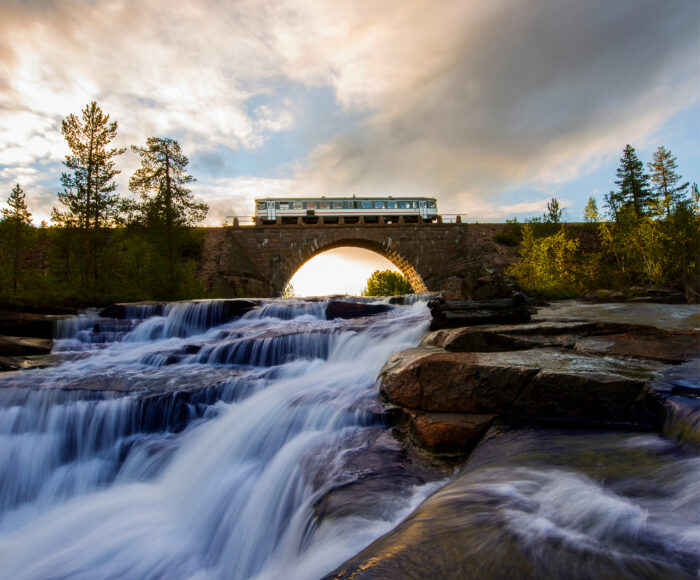
Take the train! The call becomes all the more familiar. We choose train travel for many reasons; for the environment, of course, but also for the sake of the person within us. On the train we get the chance to sit for a while and do nothing more than admire the view falling away outside the window like a long row of beautiful new dominoes. As summer is here, it’s time for you to embark on your own journey in northern Sweden.
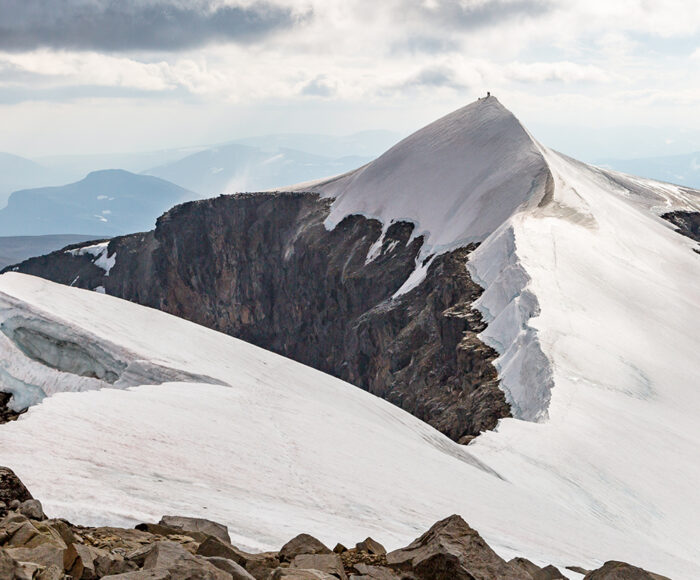
In addition to being Sweden's highest mountain, Giebmegáisi – or Kebnekaise as it came to be called in Swedish – is an interesting story about how mountains are named, and how easy mistakes are made. The mountain is also a clear sign of a changing Arctic, and for some it's a mountain to call home.
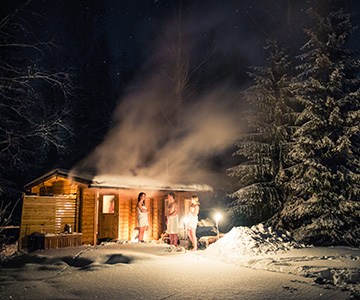
Tornedalen, the borderland between Sweden and Finland, is in many ways unique. The Torne River has never really been a border. Instead, it has tied the two countries together; never dividing, only uniting, to the benefit of sweethearts, smugglers, spies and sauna-bathing travellers. This summer take a road-trip through the promised land of the sauna.
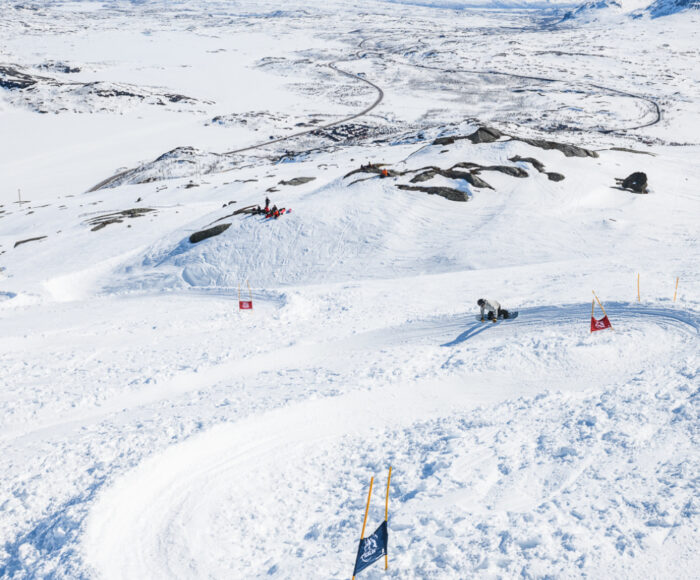
It's all about turning. No jumps, no flips, no rails. Just the beautiful art of being able to turn on a snowboard. But apart from that Riksgränsen Banked Slalom is just a great May happening.
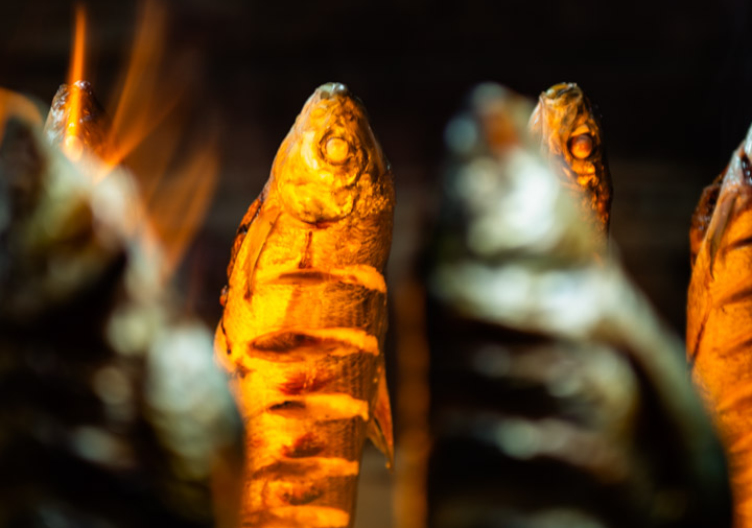
Fried Arctic char and boiled potatoes, in all their simplicity. It has been a long time since I ate so well and such uncomplicated food. Yet, the delicious taste is also associated with a very simple truth: Hunger is the best spice.
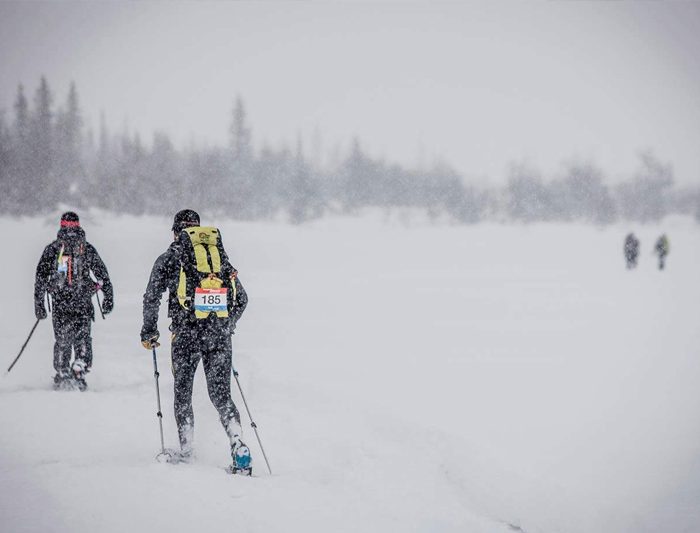
Meet Frida Lind-Oja, marketing manager and co-owner of the family business Camp Ripan in Kiruna. She is probably slightly different from many other marketing managers and hotel owners, since she in her free time gladly participates in the worlds longest ski race.
From saunas and ice baths, through forest therapy and locally grown menus, to award-winning SPA-hotels and blueberry-scented hand creams. You can take an exciting health journey through Swedish Lapland, keeping your feet firmly rooted on Arctic soil.
If you were to define skiing, it is ultimately about two planks and a passion. If you were to define skiers, however, they would probably be called the Palm family.
Sauna, or bastu in Swedish, is something as natural to people in the north as the midnight sun and the northern lights. It used to be something of a prerequisite for life in the Arctic, and now it is a rich part of the culture itself. Sauna is the essence of life up here.
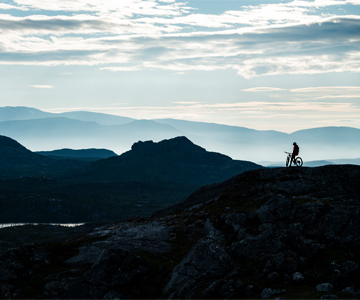
The mountain bike is said to have been invented in California in the 1970s. But the truth is that as long as there have been bikes, we have biked the paths, even in the mountains. But with today's modern mountain bikes, mountain biking has become a bit easier.
Our home, Swedish Lapland, has been formed by the Ice Age, the seasons and the reindeer. And we, too, have lived our lives in the shadow of the forces of nature.
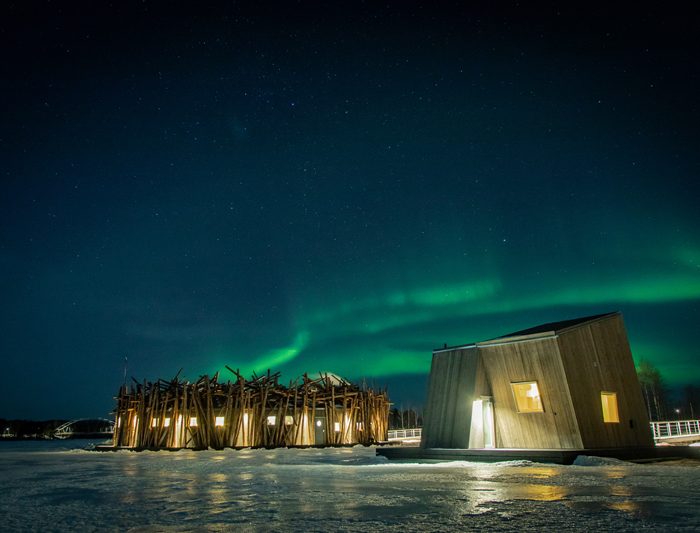
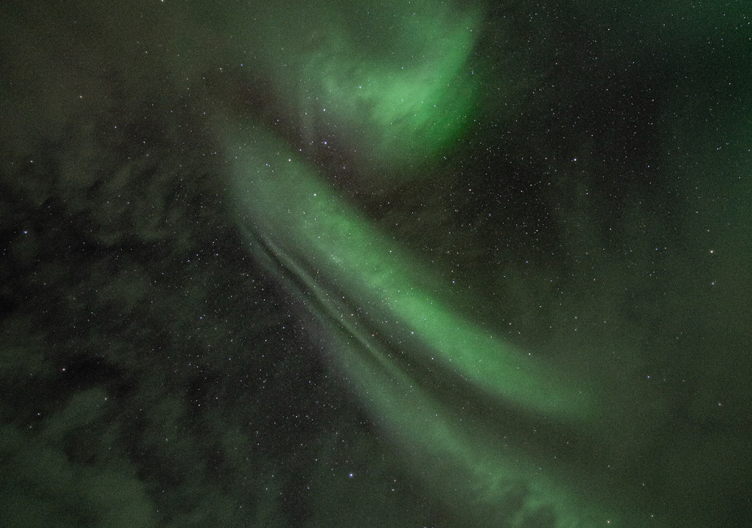
Shimmery and magical. The dance of the northern lights is a spectacular sight that we frequently enjoy in Swedish Lapland. Viewing the Aurora Borealis is both a jaw-dropping and mystical experience. But when is the best time to see the northern lights in Swedish Lapland?
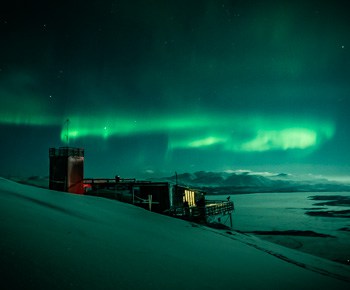
Abisko National Park, in Swedish Lapland, offers some of the best conditions in the world for northern lights watching. The unique climate of the area keep the skies almost clear, and the light pollution is next to nothing. And here, you also find the Aurora Sky Station.
There is this one hotel room that looks like a bird's nest, and another resembles a UFO. Then there is the hotel where a ruin from an old train workshop runs straight through the kitchen, and the wine cellar is an old grease pit. There is also the hotel in the middle of town that cleans the air to the same extent an entire forest would. We travel between excellent accommodation options in Swedish Lapland.
Experiencing the northern lights is on many people's bucket list. Travellers from around the world head north to experience the celestial phenomenon, hoping to snap a picture of it. Been there, done that. But then some live with the northern lights as a lifestyle. Meet photographer Mia Stålnacke, the one who stops the northern lights.
You might think that in the Arctic, we have darkness or daylight. In the winter, the sun never rises above the horizon, and in the summer, the sun never sets. But in fact, we have light all year round. Just different kinds of light. Some darker, some brighter, and some very colourful.
Autumn has only just claimed the land. Warm days in the sunshine, but cold at night when that same sun disappears behind the mountains. The landscape is coloured by the demands of the season. This is a story of a September hike around Šielmmáčohkka and upper Visttásvággi. A hike in a time of contrasts.
So, you are in Swedish Lapland, Sweden's Arctic destination, to experience the magical northern lights. Here are seven tips on how to get some good pictures of the beautiful light phenomenon to take back home.
Many think autumn is the most beautiful time of year in Swedish Lapland. It's as if Earth itself grants a generous firework display of colour before the winter sleep settles over the Arctic landscape. And it's easy to capture the show with a camera on standby. These are five simple tips for capturing autumn in a photo.
When the sun never sets, and the kids are on summer holiday. When holidays are waiting around the corner and meadows explode with wood cranesbill. That's when long lines of cars queue up to get out of the cities. It's time to go find tranquillity with friends and family in summer houses and holidays homes, away from the hustle and bustle. It's time to celebrate the most important holiday of the summer. It's midsummer.
Many towns, mountains, rivers in Swedish Lapland bear the names given to them by the Sámi people, usually describing their characteristics. When reading a map of Swedish Lapland, knowing the meaning of some Sámi words adds another, fascinating dimension to the landscape.
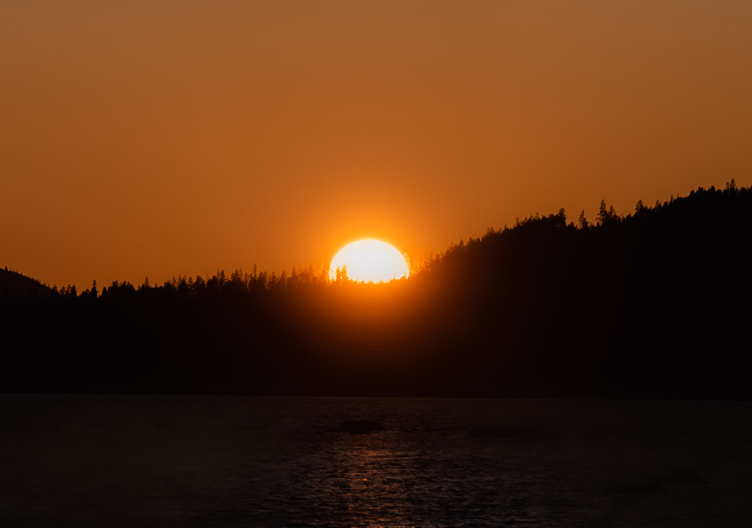
The midnight sun. The feeling of never having to face tomorrow, just keep having fun and enjoy the never-ending day, is absolutely wonderful. But. Those who depend on their beauty sleep will face certain challenges.
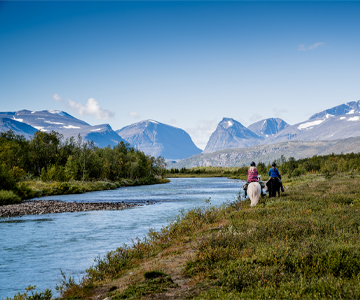
Johanna hasn't ridden a horse for 13 years, and Carl-Johan has never sat on a horse in his life. Follow them on a horseback tour through the Kiruna mountains.
Places still exist where there's no point asking for the password for the wifi. Places where you leave your mobile behind to spend some quality time with others – or perhaps with yourself. The Sámi eco-lodge Geunja and the camp in Tjuonajokk are two of Swedish Lapland's finest places.
Scouting out the 'Big Five' on the African savannah is the big dream of many. They include leopard, lion, elephant, rhino and African buffalo and is a group of large, majestic and fairly dangerous animals. Here in the Arctic part of Sweden, we don't have animals the size of an elephant or with the speed of a leopard, but we have a fair few animals that are pretty cool in their own way. Below we have listed five animals that are both unique and fascinating, definitely worth putting on a list of must-see animals.
If it's your first time visiting Swedish Lapland during the summer, you'll notice that it never gets dark. You have entered the world of the midnight sun, and if you're not used to it, it's an extraordinary experience. But beware, it might affect your sleep quality.
Is it really true that anyone can walk around the forests and beaches of Swedish Lapland? Pick berries and pitch a tent anywhere? Yup, that's exactly what it's like in the democratic forest.
That Swedes have their fika (coffee and a snack), and that they drink lots of coffee, are well-known facts. But what's the thing about having it outdoors? What's the deal with coffee boiled over an open fire?
Running is in human nature. Long before urbanisation, jogging and rubber-soled shoes made tarmac commonplace, we kept to the trails. These days, trail running is enjoying a renaissance. Running for the experience and running for those who prefer personal challenges to personal bests.
Perhaps summer and swimming aren't what first springs to mind when you think of Swedish Lapland. But, in fact, there are plenty of cool beaches and places to go for a swim – thanks to the inland ice.
A road trip is simply a way of discovering things you've never seen before. If you give yourself the chance, you might also come across flavours you've never experienced before.
When you visit Swedish Lapland, you will notice that our food culture is closely intertwined with our lifestyle. There is a strong tradition that testifies to how we have lived from what nature has generously provided us with for many millennia. Join us on a guided tour of our natural resources, taking the shortest possible route to the plate.
Small-scale, hosting and proximity to nature. Curiosity, knowledge and learning. During her visit to Geunja the Sámi Eco Lodge in the mountain landscape surrounding Ammarnäs, Maria lived in complete harmony with nature. Something happened there, and an inner journey commenced.
The barren and vast mountain landscape in the far north, called Sandåslandet – the land of the sand ridges – is as popular amongst devoted fly fishers as suitable for adventurers on fat bikes. I pack my fat bike with enough equipment to last for a week. And I’m off.
The King's Trail runs through Sweden's most beautiful mountain scenery and provides more than 400 kilometres' worth of hiking adventure for the first-time hiker as well as the truly experienced mountain veteran. It is one of the world's most famous hiking trails, and the stage between Abisko and Nikkaluokta is the most-travelled trail in all of Sweden.
When in Swedish Lapland, exploring the nature of the Arctic, chasing the northern lights or just soaking up the sun 24/7, make sure you don’t miss out on the food. Some of the food we eat might sound a bit strange, but we highly recommend you try and get a taste of Swedish Lapland.
Photographer Mattias Fredriksson started as a cleaner at Hotel Riksgränsen. Then he picked up a camera. Today he's the most published skiing photographer in the world, still with a soft spot for the old mountain hotel in his heart.
Hiking can be an amazing experience, but it can also turn into a real challenge. Spending time in the mountains means you have to be able to rely on yourself, your knowledge and your choices. We've put together some good advice below to make sure you have an amazing – and safe – mountain experience.
In 2008 photographer Chad Blakley moved to Abisko to work the summer season. He followed the love of his life: Linnea. They both quickly fell for the breath-taking landscape and the welcoming people in the village. So, Chad and Linnea decided to stay the winter as well. But it would be many more summers and winters in Abisko.
National parks are areas featuring a certain type of landscape, protected to preserve their natural condition. It's about creating opportunities to experience nature. Swedish Lapland has the most, the oldest and the largest national parks in Sweden.
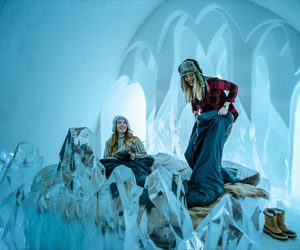
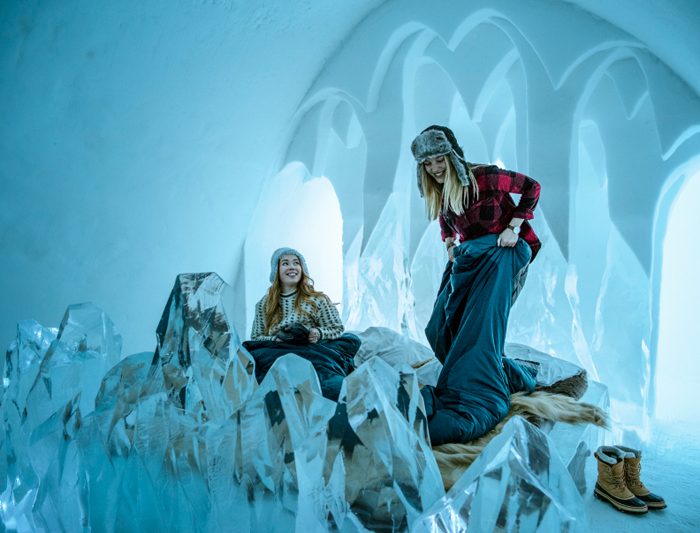
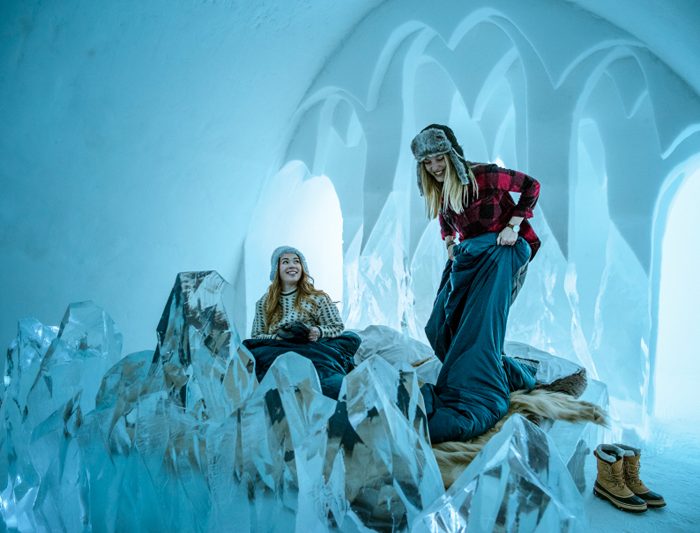
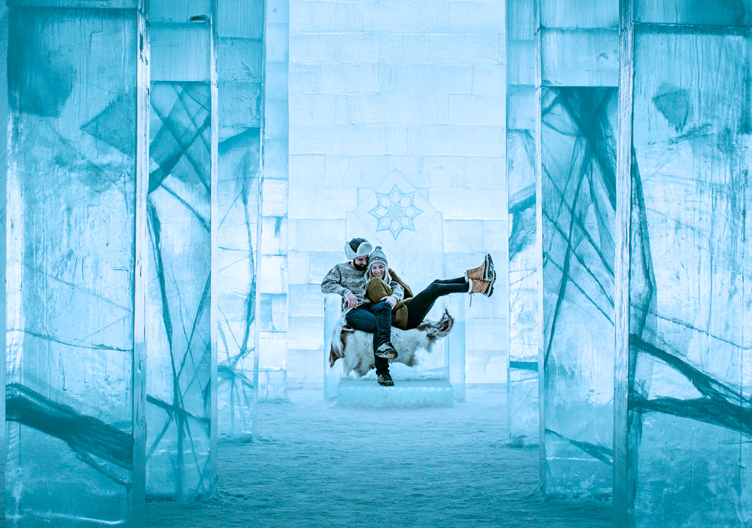
In the village of Jukkasjärvi, outside Kiruna, lies the original ICEHOTEL. Every year, since 1989, it has been reincarnated in a new rendition and there’s always more to come. From the beginning this was kind of a crazy idea in the winter, nowadays it’s as crazy all year round.
Being outdoors is a natural part of the arctic lifestyle, and during winter – skiing is the way to go. Pro or beginner, Swedish Lapland offers it all. You just need to find your flavour among our resorts. Here is our top five for downhill skiing like a champ!
Snow is something more than frozen water to the Sámi people. It's a way of expressing the foundation of their existence – the migration of the reindeer. To a skier, snow is also more than snow. It's the way you experience life.
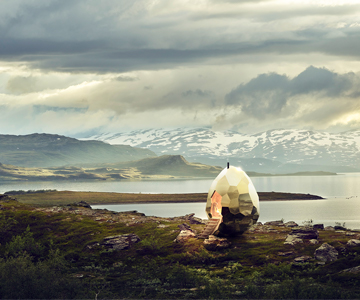
The sauna Solar Egg was created by Riksbyggen together with artist duo Bigert & Bergström and installed in Kiruna. Since then, the sauna has become a global success and taken on a tour around the world. The egg’s journey has been as spectacular as its appearance – but now, the sauna is home for good.
One thousand, two hundred and twenty-eight metres above sea level is where you find Sweden’s highest mountain station: Låktatjåkko. It takes you a couple of hours to walk there from Björkliden and halfway is probably where you’ll start craving the waffles.
There are numerous reasons to why you should experience Niehku Mountain Villa in Riksgränsen, a place which name translates to "dream" in Northern Sámi. Here we give you four of those reasons.
Autumn… It can be really boring… and dreary… and just… just wonderful! Autumn is so immediate; it makes its first appearance after a chilly night and then moves on at full speed. Its colours and clear air must be experienced in the same immediate way: right now!
Kristoffer Turdell from Gällivare is a champion of Freeride World Tour, the World Championship of Extreme skiing. His scene may be all the mountains in the world, but there's still one particular run on his mind. Down Duolbagorni in Swedish Lapland.
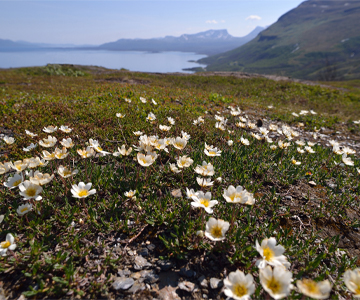
Are you curious about what kind of plants that grow in the harsh mountain climate? Ever wondered what that cute, white flower is called that you passed several times on your hike? Göran Wallin gives you a quick guide to the flora of the Swedish Lapland mountains.
In Swedish Lapland, nature plays an intrinsic role in our life and work, and the people here are highly sensitive to the small details of the changing seasons. Therefore, it seems only natural that the Sámi people describe eight seasons instead of four.
It is December and the landscape is covered in a white blanket; trees are heavy with snow and the roads are white. The dense mid-winter darkness creates a blue light during a few hours, and windows are lit up by advent stars and candlesticks. Christmas is here.
The author and fly fisherman Gunnar Westrin feels most at home in the most barren of landscapes. This is how Sandåslandet north of Kiruna became one of his retreats in life.
The most common way to experience King’s Trail (Kungsleden) is walking or skiing in a comfortable pace. But there are other ways – come along on an up-tempo journey through the scenic mountains of Swedish Lapland when Krissy, Luke and Fredrik takes on the challenge of spending a week running along this famous trail.
Swedish Lapland is Sweden’s Arctic destination, spanning from Skellefteå in the south to Kiruna in the north. The free-flowing rivers have been a connector for all the towns and villages within the de...
In Swedish Lapland, nature is always the focal point. The vast, untamed nature that is. Like the deep forests, the highest peaks and the most furiously flowing rivers. We have it all. Besides, it's no...
All our museums have their own character. From our main museum for Sámi culture via 13 different saunas to one of Sweden's largest art galleries. All of them an exciting journey...
The importance of ice in Swedish Lapland extends far beyond the hype of Icehotel. At the beginning of time, after the inland ice retracted, the ice on lakes and running water was already an important ...
Swedish Lapland is huge and of course, travelling by car is the easiest option. But not to worry, there are some lovely places you can get to using alternative means of transport. We have listed five ...
Swedish Lapland is Sweden’s Arctic destination. It’s also more than a quarter of Sweden. This gives us a fair few unique geographical spots, so of course, we can also offer some of the most interestin...
Take a little piece of Swedish Lapland home with you. Are you en route to Swedish Lapland, wondering what souvenirs to shop for? We've listed some helpful tips for you...
There are many mountains and hills to climb in Swedish Lapland. You can get to the top of Dundret by car, while Kebnekaise takes days of hard effort. What these peaks have in common is an amazing view...
People up north, both young and old, have a thing for long, sandy beaches, sunshine and compact living. At least for some weeks every summer. Wanna camp like a northerner? Here are 10great campsites f...
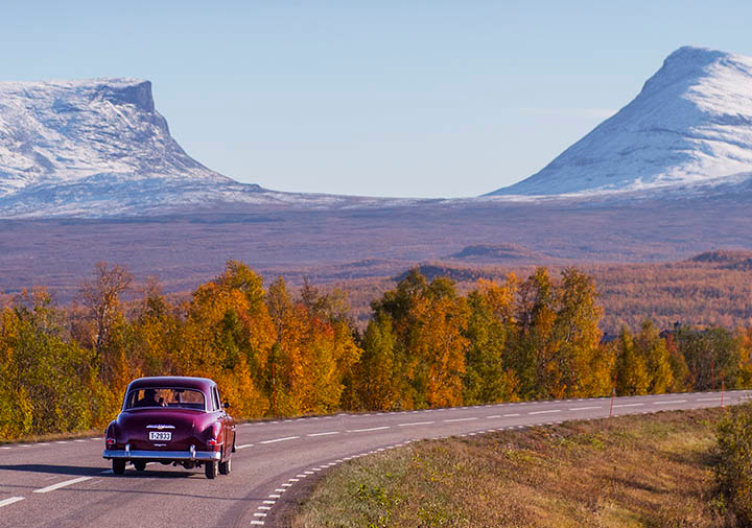
There are plenty of scenic routes, or simply beautiful roads, in Swedish Lapland. We have listed five of them that will make a journey from a to b something more than just transport. Perhaps the road ...
When the sun never sets, the possibilities don’t either! The midnight sun turns Arctic Sweden into a 24-hour playground for adventures and unforgettable summer magic...
This website is made as part of the project AHKKA, co-financed by the European Union and Region Norrbotten.




 Part of theme: